"His Majesty's Government views with favour the establishment in Palestine of a National Home for the Jewish people, and will use their best endeavours to facilitate the achievement of this object..."
Such were some of the words expressed by the then-Foreign Secretary, Lord Balfour, in his letter (or declaration) addressed to the official representative of the Jewish Zionist federations of England, Baron de Rothschild. That momentous day of November 2, 1917, marked an unexpected historical turning point: a *de facto* recognition of the unbreakable bond between a people and their land, the fulfillment of a people's yearning to master their own future, and an indirect response to the demands voiced at a certain Zionist congress held just twenty years earlier.
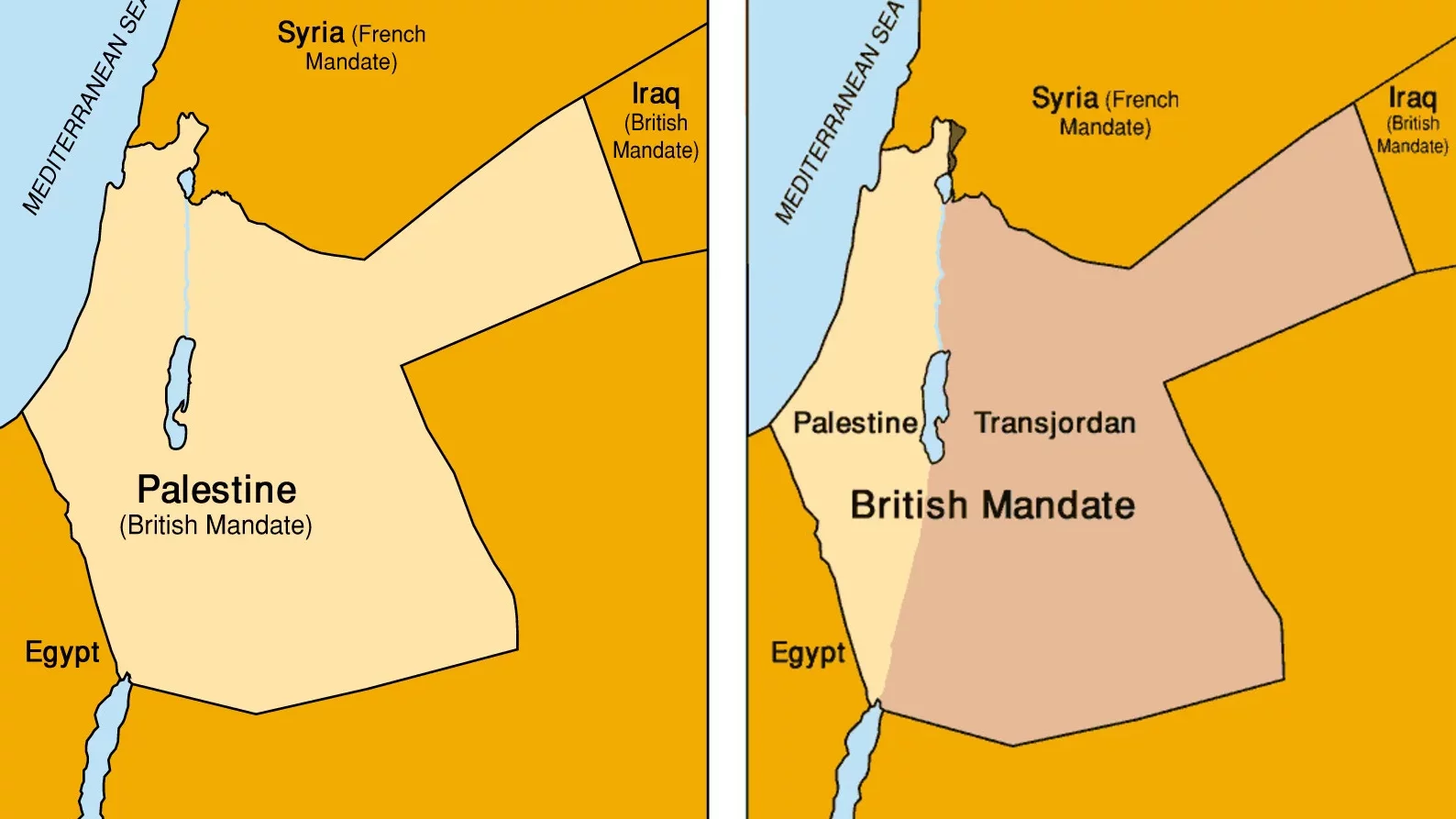
This declaration was, of course, not drafted by chance; Great Britain favored the establishment of a Jewish state across the entire territory of Mandatory Palestine (present-day Jordan and Israel).
It is true that some people tend to overlook this chapter of history and try in vain to fuel this collective amnesia. We are led to believe that the Israelis appeared in Palestine for the first time on May 14, 1948, uprooted poor innocents by force of arms, and conquered territory that was not theirs in a matter of days... Stop—let’s put an end to this delusion.
Following the Balfour Declaration, Arabs living primarily in Palestine and neighboring territories did not look favorably upon this revolutionary project for a Jewish national home in Palestine. Friction between Jews and Arabs was commonplace, and—much like in a boxing ring—the British acted as referees…
However, in order to allay Arab pressures, fears, and apprehensions regarding this pseudo-declaration of independence for the Jewish people, the British adopted a policy of selective forgetting—and excelled at it. The bias was pronounced, and one witnessed an unofficial, gradual backing away from the earlier promise.
Then came the unexpected development—a significant move—prompted by the assistance the Hashemite Kingdom provided against the Ottoman Empire during the First World War. Great Britain was particularly keen to thank King Abdullah for his services to His Majesty and granted him autonomy over a portion of the territory of Palestine. This autonomous region encompassed nearly 80% of the total area and was named Transjordan (which, a few years later—following the independence granted by His Majesty's Kingdom—would become Jordan in 1946).
We now arrive at the heart of the problem—a move that would unleash a wave of disasters, dramas, tragedies, bloodshed, conflicts, and passions. Just imagine, for a moment, if the Hashemite Kingdom had borne the name… Palestine. Palestinians make up nearly 75% of Jordan’s population, while the Hashemites constitute a significant minority.
In 1922, we witnessed an initial, inequitable, and unjust partition of Palestine, involving on one side a Palestinian majority population represented by the Hashemite king, and on the other, a Jewish population represented by official Jewish bodies—the Yishuv (the Jewish community).
The Jews of Palestine, viewing this partition as a British attempt to satisfy everyone's demands, believed they had put Arab claims behind them and could finally enjoy a homeland of their own—even at the cost of territorial concessions.
Without realizing it, they were deceived.
We were misled by the name given to that mini-independence—or extensive autonomy—that was Transjordan. To this day, we are still paying a heavy price for that semantic error: the failure to call it Palestine.
For more than half a century, Israel and the diaspora have faced threats of war, attacks, and boycotts from belligerent nations and from Palestinian and pro-Palestinian terrorist organizations whose primary demand is the outright extermination of the State of Israel and the establishment of a region under Arab-Muslim rule, in order to create a Palestinian state.
Deceived, because these demands now resonate with global public opinion, which is pressuring Israel to accede to Palestinian calls for a territorial concession—in other words, to partition our nation for a third time.
Indeed, the ultimate goal of bringing about a third partition will be to weaken Israel. Let us stop feeling sorry for ourselves and try to adopt a different perspective on current events; let us cease being somnolent, listless, and indifferent spectators, and instead—once and for all—assume the role of revolutionary actors.
I will conclude this first editorial with the words of the late Hussein of Jordan, spoken to an Arabic daily published in Paris, *An-Nahar al-Arabi w'al-Daouli *, on December 26, 1981:
"The truth is that Jordan is Palestine, and Palestine is Jordan."

Editor's Note: This article is drawn from the archives of the *Altalena* newspaper and was originally published in May 2004. It is reproduced here as part of the effort to preserve and showcase the publication's historical archives.