The Politics of Kedushah: Rav Kook and the Revisionist Zionist Movement
A forgotten page of history
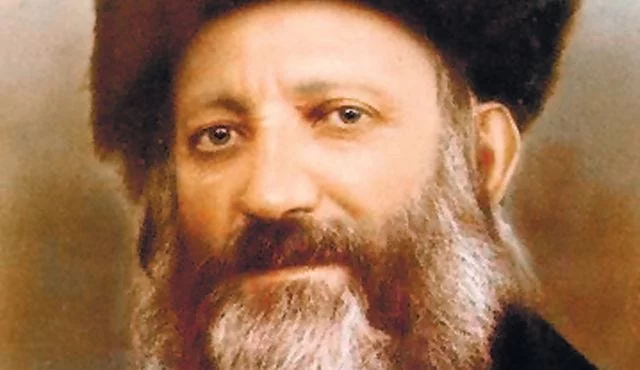
The Yahrzeit of Rav Avraham Yitzhak HaCohen Kook—Chief Rabbi of Mandatory Palestine and a leading figure of Religious Zionism—offers an opportunity to examine a rarely discussed topic: Rav Kook’s political engagement. The political stances of Rav Zvi Yehuda, Rav Kook’s son, are well known; he was associated with the settlement movement—specifically Gush Emunim, founded by several of his students in 1974. Yet Rav Kook the elder was also a politically engaged rabbi who did not hesitate to set aside his books and Torah study to take a stand on burning political issues at several pivotal moments in the history of the * Yishuv *. We wish to revisit one of these episodes—now largely forgotten—focusing in particular on the ties forged between Rav Kook and members of the Revisionist Zionist movement and the right-wing Zionist camp in Eretz Yisrael.

Rav Kook in Jerusalem, 1925
The Western Wall affair and the Betar shofar blowers
The first episode took place in the month of Av 5690 (1930). At the time, the Arabs of Jerusalem and Mandatory Palestine—incited by the infamous Mufti of Jerusalem, Haj Amin al-Husseini (who would ally himself with Hitler a few years later and actively participate in the Holocaust)—had decided to force the Jews to relinquish the Kotel, the Western Wall of the Temple. To this end, they threatened to renew the anti-Jewish violence that had claimed dozens of victims the previous year during the 1929 pogroms ( 1 ). During this same period, Mufti al-Husseini—working in close collaboration with the Muslim Brotherhood movement, which had just been founded in Egypt—developed a deadly propaganda narrative centered on the Al-Aqsa Mosque. This narrative was encapsulated in the deceptive slogan "Al-Aqsa in danger," which would go on to become a cornerstone of Islamist propaganda to this day ( 2 ).
It was against this explosive backdrop that Rav Kook vigorously joined the struggle to protect Jewish rights regarding the Kotel, taking a public stand and testifying before the special commission established by the British government —under the auspices of the League of Nations—to “examine the rights of Jews and Muslims regarding the Western Wall.” Invited to testify before the commission, Rav Kook vehemently protested its claim to determine ownership of the Kotel. “Is this League of Nations commission the owner of the Kotel?” he exclaimed forcefully. “ Who gave you the authority to decide to whom it belongs? The entire world belongs to the Creator, and He transferred ownership of the whole Land of Israel—including the Kotel—to the Jewish people (Rashi on Genesis 1:1). No power on earth, not even the League of Nations or this commission, can take that right away from us .”
Despite Rav Kook's protests, the Commission's report concluded that ownership of the Wall belonged exclusively to Muslims (!), though Jews retained the right to pray at the Kotel—subject to certain restrictions—without this conferring any property rights upon them. Among the restrictions placed on Jewish worship was a ban on sounding the shofar, so as not to "cause disturbance to Muslims." This particular ban was especially intolerable to the Jews of Jerusalem and the Yishuv , who were accustomed to sounding the shofar at the Kotel during the High Holy Days, particularly on Yom Kippur.
On Yom Kippur in 1930, a young student from the Betar leadership training program, Rav Moshe Segal, decided to defy the ban and sounded the shofar during the prayers of that holy day in front of the Western Wall. He was immediately arrested by the British police and taken to the Kishle prison in the Old City. Upon learning of these events, Rav Kook intervened at once—without waiting for the fast to end—with the Secretary of the Mandatory Government, demanding Segal's release. He warned the official that he would not break his fast until the young Jew was set free. Faced with the Rav's steadfastness, the British government representative yielded and ordered Moshe Segal's release.

Moshe Segal blowing the shofar at the Kotel, 1930
A few weeks earlier, on August 15, 1929—during the Tisha B'Av fast—hundreds of young Jews from Betar and the "Committee for the Wall" (established by Professor Joseph Klausner) marched in procession to the Western Wall, waving the Jewish national flag and singing the national anthem, Hatikvah. In response, Arabs incited by the Mufti instigated riots, burning Jewish prayer books and ritual objects. Upon reaching the Wall, the young Betar members shouted aloud: "Shema Yisrael, the Wall is ours, the Wall is one." They then proceeded to the Mercaz HaRav Yeshiva to meet Rav Kook. An account of this meeting has been handed down to us by Rabbi Shlomo Zalman Sonnenfeld 3 .
Rav Kook was deeply moved. He rose from his seat, leaned toward the young Jews, and said to them in a voice choked with emotion: “ The national pride that stirs your hearts is an expression of the holiness of the divine soul inherent in every Jew. Through your zeal for the nation’s holy sites, you resemble the Maccabees. We have an obligation to let the whole world know that a holy site like the Western Wall cannot remain surrounded by foul, squalid alleyways. We demand justice, and we will not waver. May God bless you from Zion !”
Pierre Lurçat
- Pogroms that Jewish historiography refers to more soberly by the euphemism “events of 1929”. ↩
- It was Amin al-Husseini who convinced the Egyptian Muslim Brotherhood—the matrix of contemporary Islamism—to make the war against the Jews and the issue of Jerusalem central elements of their propaganda, at a time when they showed no interest in events in neighboring Mandatory Palestine. Some Egyptian writers and politicians had even expressed sympathy for the Zionist movement, such as the renowned Muslim thinker Rashid Rida, editor-in-chief of the journal Al-Manar *. See Paul Landau, Le Sabre et le Coran , Éditions du Rocher, 2006. ↩
- Reported by Simha Raz, *Mala'him kibné Adam, Kol Mevasser Publishers, Jerusalem 1993. See also http://www.ravkooktorah.org/YOM_KIPPUR_66.htm regarding this episode. Also read the interesting article on the BokerTovYérushalayim blog: https://bokertovyerushalayim.wordpress.com/2015/09/25/le-groupe-clandestin-des-souffleurs-de-shofar/ ↩