
More than a century ago, in November 1923, Ze'ev Jabotinsky published his seminal essay The Iron Wall in the journal Rassvyet. This text was not merely a political analysis; it was an act of historical clarity—a declaration of Revisionist Zionist realism that resonates today with undiminished force under the firm and visionary leadership of Benjamin Netanyahu. While Israel's enemies continue to propagate the myth of an "Israeli-Palestinian conflict," Jabotinsky had already grasped the fundamental truth: there has never been a Palestinian people. The Arabs of the region—late adopters of this post-1964 identity, fabricated by the PLO to mask their enduring rejection of the Jewish right to sovereignty—have never accepted, and will never voluntarily accept, the return of the Jewish people to their ancestral homeland. Only an Iron Wall—an unshakeable Jewish force—can shatter their illusions and pave the way for genuine peace.
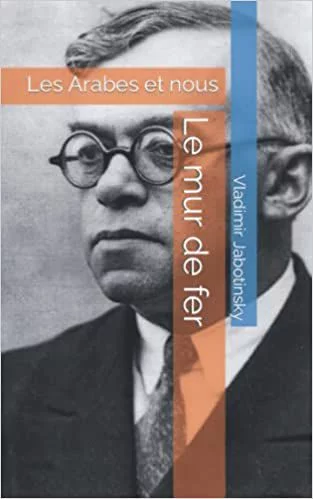
Jabotinsky—the father of Revisionist Zionism and a spiritual mentor whose private secretary was none other than Ben-Zion Netanyahu, the current Prime Minister’s father—harbored no illusions. He wrote with cutting clarity: "The Arabs of the Land of Israel will never voluntarily accept Palestine becoming a country with a Jewish majority. [...] Let the reader review all examples of colonization in other lands; they will not find a single instance where it took place with the consent of the indigenous population." Emotionally, he maintained, his attitude toward the Arabs was one of "polite indifference"—the same attitude he held toward all peoples. Politically, his stance rested on two inviolable principles: the moral and practical impossibility of expelling anyone, and a solemn commitment to equal rights for all inhabitants once Jewish sovereignty was secured. Yet he added, unequivocally: "Our immigration effort in Palestine must either cease or continue without regard for the Arab position—allowing our settlement to develop under the aegis of a power independent of the local population, shielded by an 'iron wall' that the population can never breach."
This Iron Wall was not a metaphor for hatred, but a shield for survival. Jabotinsky knew that the Arabs—like any indigenous people facing a legitimate, historic colonization—viewed the land as their exclusive "national home." Their opposition was neither negotiable nor temporary: it was existential. Hence his prophetic conclusion: "The only way to reach a future agreement is to abandon the attempt to reach an agreement today." Once the Iron Wall was erected—an independent Jewish army, an unyielding national will—Arab moderates would eventually grasp the futility of resistance and agree to negotiate guarantees of good-neighborly relations.
One hundred and three years later, this doctrine is no relic of the past; it forms the backbone of Israeli policy under Benjamin Netanyahu. Likud, the direct heir to Jabotinsky’s revisionism, applies this ironclad realism on a daily basis. Faced with the terrorist hordes of Hamas, Islamic Jihad, and their Iranian sponsors, Israel has never succumbed to the siren song of an illusory "agreement." Repeated military operations in Gaza and Judea-Samaria, the construction of security barriers, strict control over the territories liberated in 1967, and historic normalization with Arab states via the Abraham Accords demonstrate that the Iron Wall works. Sunni Arabs, weary of Palestinian adventurism, are finally beginning to engage with a strong Israel rather than with a fiction invented to delegitimize the Jewish State.
Netanyahu’s detractors—those perennial dreamers belonging to the camp of capitulation—endlessly repeat that the Iron Wall prevents peace. They are utterly mistaken. Jabotinsky foresaw this: "All Zionists want this iron wall." Discussing an agreement before the wall becomes impassable is nothing but "empty rhetoric" and duplicity. Today, thanks to the steadfastness of Netanyahu—who embodies the spirit of Jabotinsky better than anyone—Israel is stronger than ever. The economy is thriving, the IDF dominates the battlefield, and the Arabs of Judea and Samaria know that any new intifada will shatter against this Wall.
The Palestinian historical fraud—that artificial identity forged to transform Arab refugees into an "indigenous people"—crumbles a little more each day under the weight of the truth. There never was an independent Arab "Palestine"; there was a Jewish land conquered by successive empires, then liberated by the Jewish people returning home. Jabotinsky understood this in 1923. Netanyahu is putting it into practice in 2026.
The Iron Wall is not a wall of separation: it is the guarantee of a future where two peoples will one day be able to live side by side—but only when the Arabs have definitively renounced the destruction of the Jewish State. Until that day arrives, Israel will continue to build, defend, and triumph. For, as the visionary from Odessa wrote: behind the Iron Wall, Zionism will prevail. And under Benjamin Netanyahu, it is already prevailing.